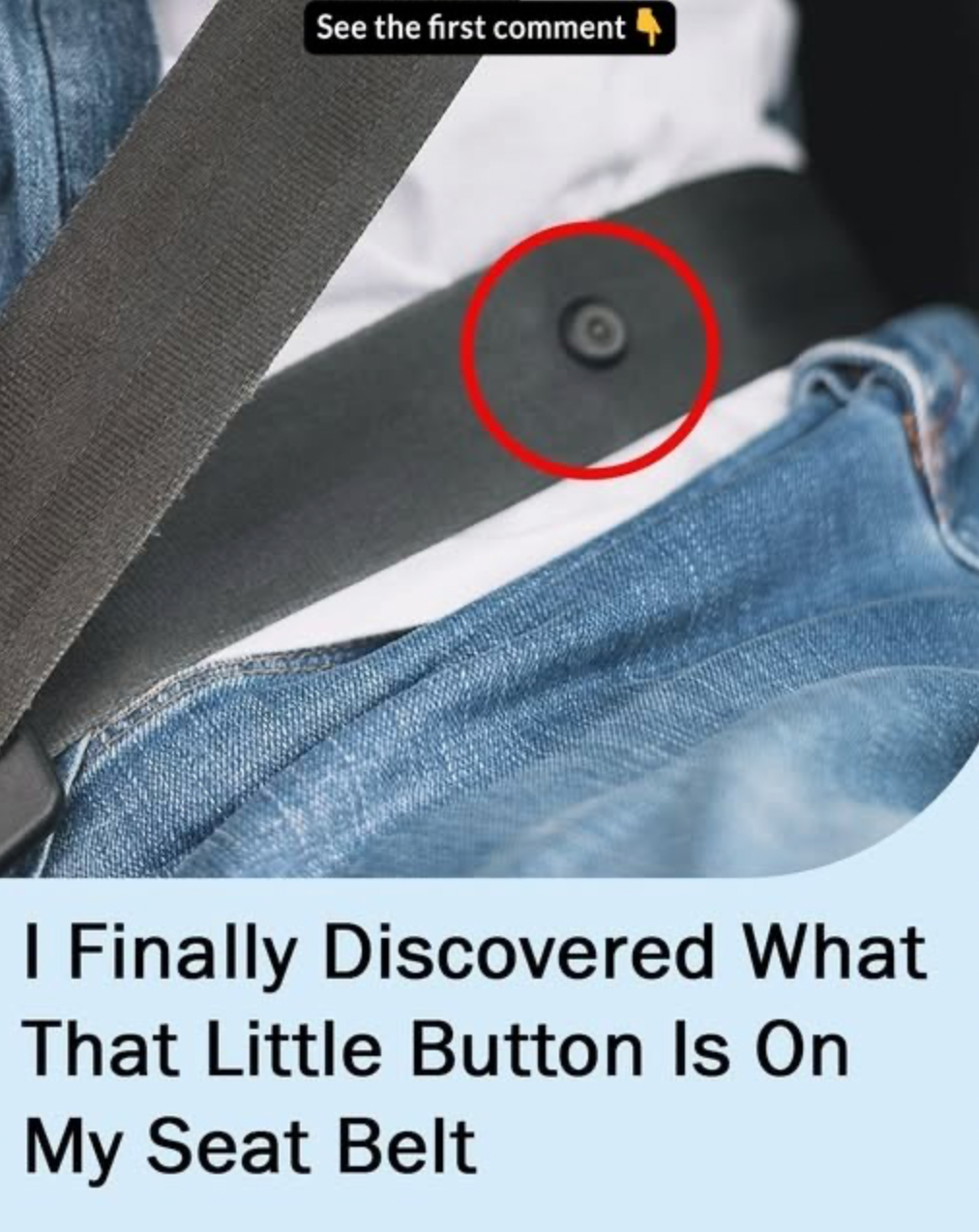
Have you ever glanced down at your car’s seatbelt and noticed that tiny button or clip attached to the strap, usually near the buckle or shoulder area? At first, it might look like a simple, insignificant piece of plastic—perhaps a leftover from manufacturing or a decorative element. But that small button actually serves a critical and thoughtful function designed to improve your safety, comfort, and convenience every time you buckle up.
What Is That Small Button on Your Seatbelt?
The little button or clip you see on your seatbelt strap is often referred to as a seatbelt stopper or tongue retainer clip. Its primary purpose is to prevent the metal tongue—the part of the seatbelt that clicks into the buckle—from sliding all the way down the strap and disappearing out of reach.
When you unbuckle your seatbelt, the metal tongue can sometimes slide freely along the webbing of the belt, potentially slipping into a narrow gap between the seat and the car frame, or moving to an awkward position that makes it difficult to locate and fasten again quickly.
How Does This Small Button Improve Safety and Convenience?
- Keeps the Seatbelt Ready for Use
By stopping the metal tongue from sliding too far down, the button keeps it within easy reach. This means that when you or your passengers want to buckle up, you don’t have to fumble around trying to find the tongue, especially in low-light conditions or while in a rush.
- Prevents Damage to the Seatbelt
If the metal tongue slides unchecked and gets caught or pinched in the car seat or door frame, it could potentially cause wear and tear on the webbing or the tongue itself. The button helps keep the tongue positioned safely along the belt to minimize this risk.
- Enhances Proper Seatbelt Positioning
The stopper also assists in ensuring the seatbelt webbing lies correctly across the shoulder and chest, rather than bunching up or twisting. A well-positioned seatbelt is crucial for effective protection in the event of an accident.
Design and Variations: Small But Smart
Depending on the car manufacturer and model, this small button can vary in shape, size, and material. Some are simple rounded plastic discs, while others may be molded into more ergonomic shapes or include branding. Despite their differences, all versions share the same essential function.
In addition to the button, some seatbelts include a slider adjuster—a plastic piece that allows the seatbelt height to be customized to fit the occupant comfortably. Together, these components ensure that seatbelts can accommodate a wide range of body sizes and preferences without sacrificing safety.
A Brief History: The Evolution of Seatbelt Design
Seatbelts have come a long way since their inception in the early 20th century. Early models were simple lap belts, which provided limited protection. Over time, the development of the three-point seatbelt—patented by Volvo engineer Nils Bohlin in 1959—revolutionized automotive safety, becoming the standard worldwide.
As seatbelts became more widespread and sophisticated, designers paid attention to every detail—including small parts like the stopper button. These seemingly minor components have been refined to enhance user experience and encourage consistent seatbelt use by making the belts easier and more comfortable to operate.
Why Do Some Seatbelts Not Have This Button?
You may have noticed that not every seatbelt has this small button or stopper. In some cases, the vehicle manufacturer or seatbelt supplier opts for a design without it, relying on the natural friction of the webbing or alternative methods to keep the tongue in place.
Additionally, newer cars sometimes include advanced seatbelt systems integrated with pretensioners and load limiters, which can change the need or placement of such components. Nevertheless, the presence of a stopper button remains a common and practical feature in many vehicles around the world.
Tips for Seatbelt Care and Maintenance
Since the small button plays a role in keeping your seatbelt functioning properly, it’s good to occasionally check that it’s intact and not cracked or loose. Damaged buttons can reduce effectiveness, causing the metal tongue to slide unpredictably, which may lead to discomfort or difficulty buckling up.
Regular cleaning of your seatbelt straps and their components can also help maintain their longevity. Use mild soap and water, avoiding harsh chemicals that might degrade the materials.
Final Thoughts: Small Details Make a Big Difference
Though easily overlooked, the tiny button on your seatbelt strap is a great example of how thoughtful engineering and design go hand-in-hand to improve everyday safety. It may be small, but it serves an important purpose—helping keep you safe, comfortable, and secure whenever you get behind the wheel.
So the next time you buckle up, take a moment to appreciate the little things that keep you protected, including that humble button quietly doing its job every day.