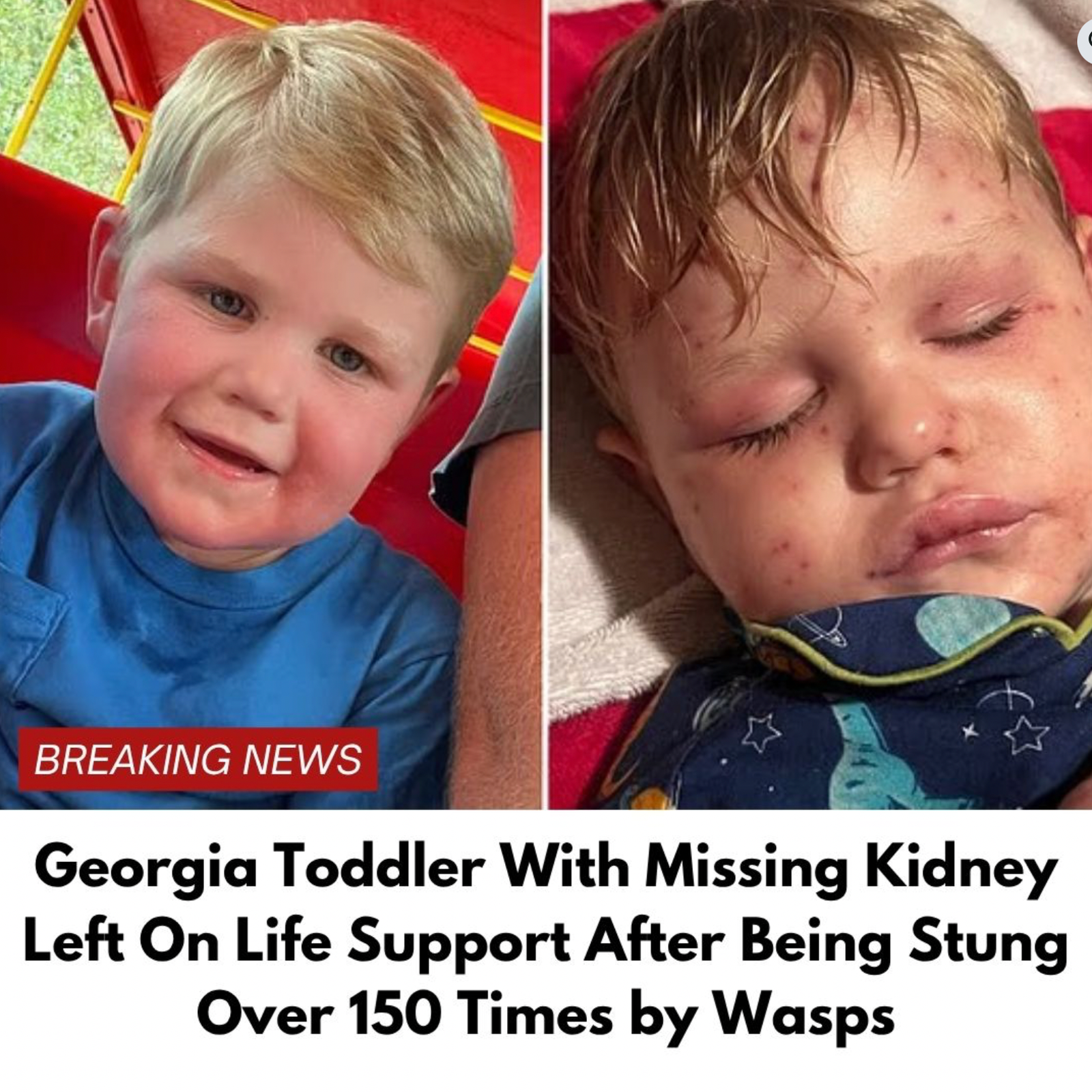
In what began as an ordinary day of play and laughter, a tragic turn of events has left a Georgia family facing every parent’s worst nightmare. Two-year-old Beckham Reed, a cheerful and energetic toddler with an infectious smile, is now fighting for his life in the hospital after suffering more than 150 yellow jacket stings in a sudden and vicious attack that caused his small body to go into multi-organ failure.
The harrowing incident unfolded on a warm afternoon in early summer, when Beckham was spending time with his cousins in the backyard of a family member’s home. The children were playing together, riding an electric toy car—a favorite pastime for the little boy who loved anything with wheels. The grass was green, the air was filled with the sound of giggles, and there was no hint of danger.
But beneath the ground, hidden from sight, lay a large yellow jacket nest. Unlike honeybees, yellow jackets are aggressive wasps that live in colonies, often building their nests underground. They are notoriously territorial and will attack in large numbers if disturbed.
According to relatives, Beckham unknowingly drove the toy car over the nest entrance. In an instant, the insects erupted from the ground in a furious swarm. Within seconds, they covered his body—legs, arms, neck, and even his face—stinging repeatedly with sharp, venomous precision. His cries of pain pierced the air as the yellow jackets attacked relentlessly.
Family members rushed to help, desperately swatting away the insects with their hands and trying to pull the toddler to safety. But yellow jackets do not lose their stingers like honeybees; they can sting over and over again, and when one stings, it releases a chemical that signals others to attack the same target. By the time Beckham was freed from the swarm, he had been stung more than 150 times.
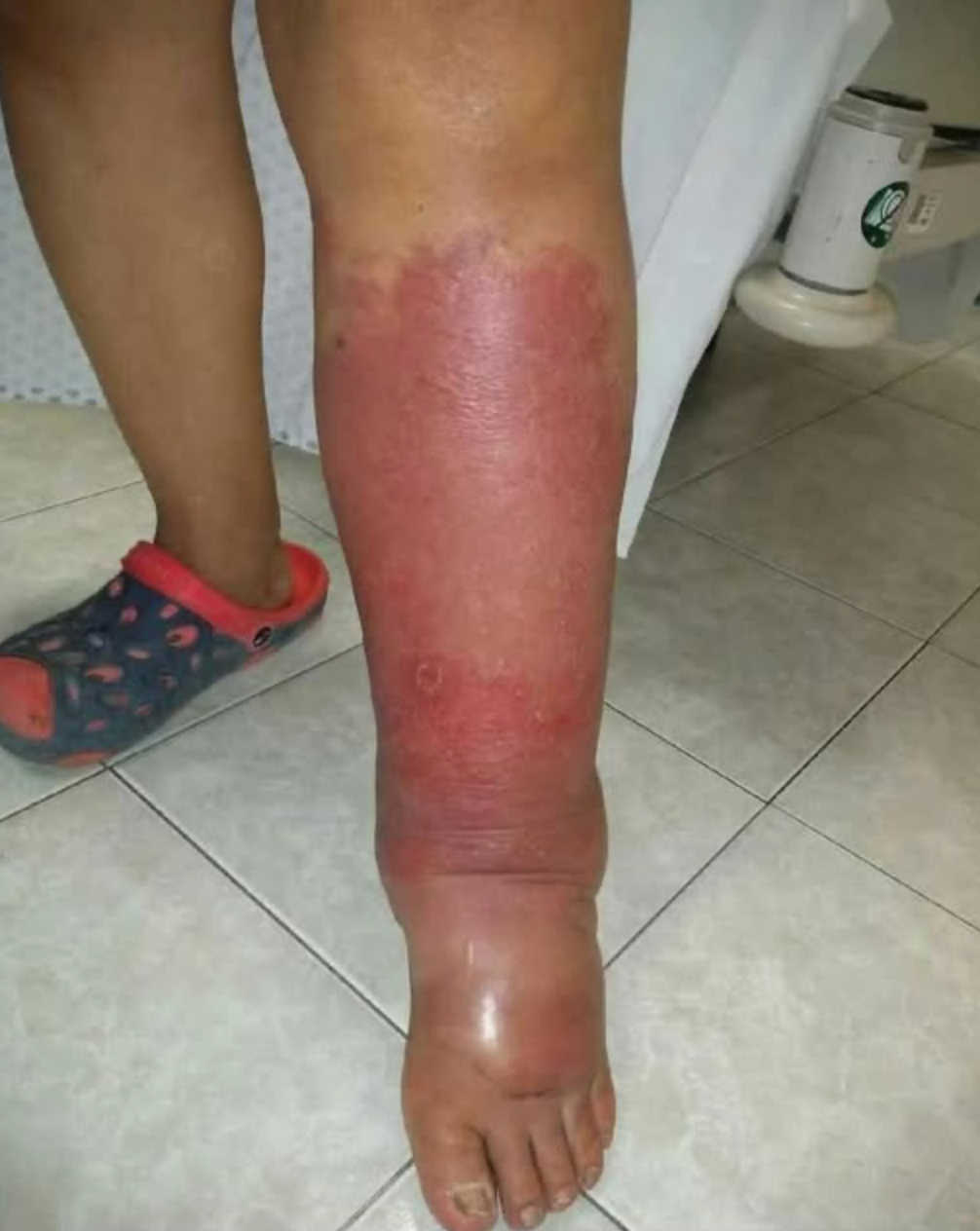
Paramedics were called immediately. The severity of the attack was clear the moment emergency responders arrived. Beckham’s skin was covered in red, swollen welts. He was struggling to breathe, his body reacting violently to the massive envenomation. He was rushed to a nearby hospital, where doctors quickly assessed the damage.
The sheer number of stings meant his small body had absorbed a dangerous dose of venom. The toxins were affecting multiple organ systems—his kidneys, liver, and heart were under immense stress. The medical team worked frantically to stabilize him, initiating treatments to prevent further organ damage and reduce the severe swelling.
By the evening, Beckham had been transferred to a specialized pediatric intensive care unit for advanced care. Doctors confirmed that he was in multi-organ failure, a rare but life-threatening complication of massive insect stings. His condition was critical, and the next 48 hours would be crucial.
Family members began updating loved ones and community members through social media. In heartfelt posts, they described Beckham as a bright, loving boy who adores trucks, animals, and spending time outdoors. Photos shared by relatives showed him smiling in happier times—clutching a toy car, playing in the yard, or cuddling with family pets.
The news quickly spread, drawing an outpouring of prayers, messages, and support from neighbors, friends, and even strangers. A local fundraiser was launched to help cover medical expenses, and within hours, hundreds of people had contributed, leaving encouraging notes for the family.
Experts say yellow jacket attacks of this magnitude are rare but can be deadly, especially for young children. Dr. Emily Carrington, an entomologist and public health specialist, explained that yellow jackets are “one of the most aggressive stinging insects in North America” and that their venom can cause not only allergic reactions but also toxic effects when delivered in large quantities.
“Even for a healthy adult, more than 100 stings is a medical emergency,” Dr. Carrington said. “For a child as small as Beckham, the venom load from over 150 stings is extremely dangerous. It’s a race against time to keep his vital organs functioning while the body processes and eliminates the toxins.”
Beckham’s family remains by his bedside, taking turns holding his hand, talking to him softly, and keeping vigil during the long nights. His mother has asked the community to “pray without ceasing” for her son’s recovery, saying, “He is the light of our lives. He’s a fighter, but he needs every bit of strength and love we can send his way.”
Doctors have warned that even if Beckham survives, his recovery could be long and complicated. Prolonged organ damage, muscle breakdown, and risk of infection are all serious concerns in the aftermath of such an extreme envenomation.
For now, the family clings to hope. The sound of monitors beeping in the ICU is a constant reminder of the fragility of life—but also of the miracles that can happen when a community comes together. As one relative wrote in a public post, “We believe in Beckham. We believe in God’s healing. And we believe in the power of love to carry us through.”